
GBV takes numerous forms such as intimate partner violence, sexual violence, child marriage, female genital mutilation (FGM) 'so-called ‘honour crimes', trafficking for sexual exploitation, female infanticide, and ‘honor’ crimes.
Gender-Based violence (GBV) - refers to harmful acts directed at an individual based on their gender.
It is rooted in gender inequality, the abuse of power and harmful norms, (UNHCR Website).Current Scenario- UNICEF indicates that Gender-Based Violence (GBV) is the most pervasive yet least visible human rights violation in the world. It includes physical, sexual, mental, or economic harm inflicted on a person because of socially ascribed power imbalances between males and females. It also includes the threat of violence, coercion, and deprivation of liberty, whether in public or private.
Global Statistics - Gender-based violence (GBV) or violence against women and girls (VAWG), is a global pandemic that affects 1 in 3 women in their lifetime. The numbers are staggering: 355 of women Worldwide have experienced either physical and/or sexual intimate partner violence or non-partner sexual violence. Globally, 7% of women have been sexually assaulted by someone other than a partner. Globally, as many as 38% of women are committed by an intimate partner. 200 million women have experienced female genital mutilation/cutting,(The World Bank Website).
Women and Girls are mostly the victims of GBV- In all societies, women and girls have less power than men over their bodies, decisions, and resources. Social norms that condone men’s use of violence as a form of discipline and control reinforce gender inequality and perpetuate gender-based violence, (UNICEF Website).
Types of GBV- GBV takes numerous forms such as intimate partner violence, sexual violence, child marriage, female genital mutilation (FGM) 'so-called ‘honour crimes', trafficking for sexual exploitation, female infanticide, and ‘honor’ crimes, intimate partner violence, and deprivation of nutrition and education (UNICEF Website). Forms of GBV- Gender-based violence can include sexual, physical, mental and economic harm inflicted in public or in private. It also includes threats of violence, coercion and manipulation, UNHCR Website).
Effects of GBV to the person- The survivor suffer devastating short and long-term consequences to their physical and mental health. They may experience severe physical injuries, unwanted pregnancies, and exposure to HIV or other sexually transmitted infections. Depression, anxiety, post-traumatic stress disorder (PTSD), the limited ability to complete daily tasks, and suicidal thoughts are also common, (UNICEF Website).
Social Economic effect of GBV- This issue is not only devastating for survivors of violence and their families, but also entails significant social and economic costs. In some countries, violence against women is estimated to cost countries up to 3.7% of their GDP – more than double what most governments spend on education. Failure to address this issue also entails a significant cost for the future. Numerous studies have shown that children growing up with violence are more likely to become survivors themselves or perpetrators of violence in the future, (The World Bank Website).
GBV Versus Human Rights- It is a serious violation of human rights and a life-threatening health and protection issue, (UNHCR Website). Current Scenario- It is estimated that one in three women will experience sexual or physical violence in their lifetime. During displacement and times of crisis, the threat of GBV significantly increases for women and girls (UNHCR Website).
The stigma associated with GBV is a barrier to seeking help- The survivors mostly suffer in silence preferring to keep silent and safeguard themselves from the vicarious trauma of pursuing the matter and re-traumatization and shame.
Unique Characteristic of GBV- One characteristic of gender-based violence is that it knows no social or economic boundaries and affects women and girls of all socio-economic backgrounds: this issue needs to be addressed in both developing and developed countries, (UNHCR Website).
Best Practice in Addressing GBV- Decreasing violence against women and girls requires a community-based, multi-pronged approach, and sustained engagement with multiple stakeholders. The most effective initiatives address underlying risk factors for violence, including social norms regarding gender roles and the acceptability of violence, (UNHCR Website).
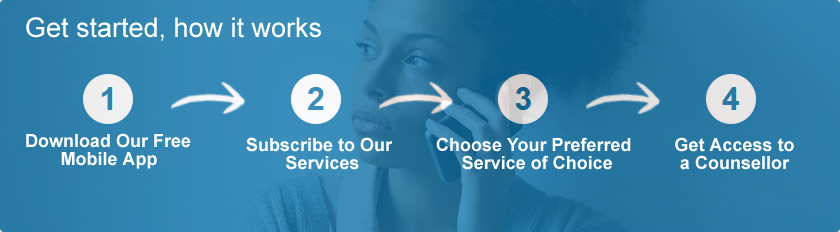
Share with a Counsellor- is coming to that secret place to provide the mental wellness support all GBV survivors that need to process the pain and find more support systems. For help with GBV incidences seek help through the Mobile Application; Share with a counsellor, and the case will be handled, linked or referred.